
Green Economy and Sustainable Investment Between Kenya and Arab Nations
Building a Shared Future Through Trade, Innovation, and Responsible Growth
The relationship between Kenya and Arab nations is entering an important new stage. For many years, trade, logistics, tourism, agriculture, energy, and investment have connected Kenya with the Arab world. Today, a new area is becoming central to this relationship: the green economy.
A green economy is not only about protecting the environment. It is also about creating jobs, improving business efficiency, supporting food security, developing clean energy, and building long-term economic resilience. For Kenya and Arab nations, this creates a strong opportunity to work together in a practical and positive way.
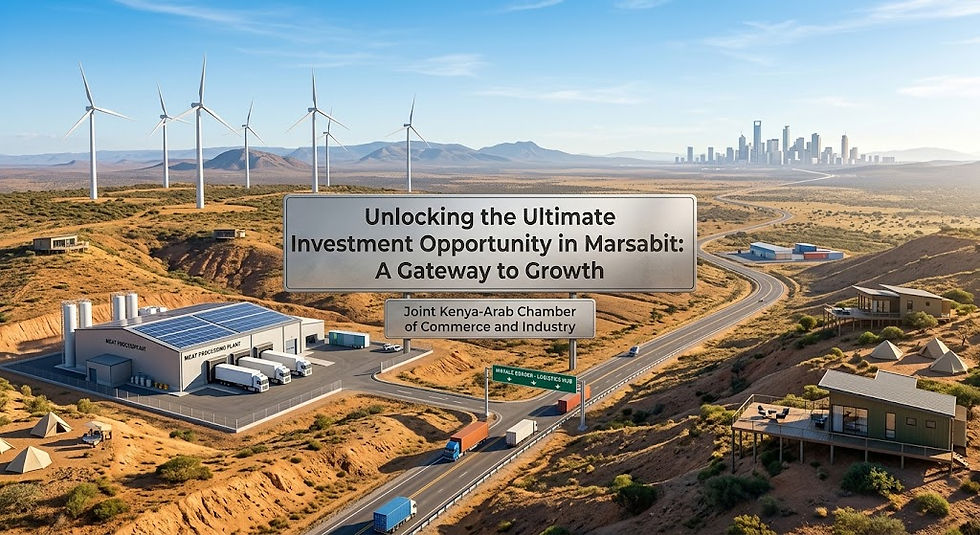
Kenya has many natural advantages that support sustainable investment. The country has strong potential in renewable energy, including geothermal, wind, solar, and hydro power. It also has a young and skilled workforce, a strategic location in East Africa, and an active private sector. These strengths make Kenya an attractive destination for investors who are looking for long-term, responsible, and future-focused opportunities.
Arab nations also bring valuable strengths to this partnership. Many Arab economies have developed strong experience in infrastructure, logistics, finance, energy, agriculture technology, smart cities, and large-scale investment. Several Arab countries are also investing heavily in sustainability, renewable energy, water management, and climate-smart development. This makes cooperation between Kenya and Arab nations natural and timely.
One of the most promising areas is clean energy. Kenya’s renewable energy base creates opportunities for investment in generation, storage, transmission, and green industrial zones. Arab investors with experience in energy and infrastructure can support projects that help expand clean electricity access, strengthen industrial growth, and create new employment opportunities.
Agriculture is another important sector. Kenya is a major agricultural economy, while many Arab nations place high importance on food security. Sustainable investment can support irrigation, cold storage, food processing, smart farming, organic production, and export logistics. This can help Kenyan farmers reach wider markets while giving Arab partners access to reliable and responsible food supply chains.
Green logistics also offers major potential. Kenya’s ports, airports, roads, and regional trade links make it a gateway to East and Central Africa. Investment in efficient transport, clean warehousing, digital trade systems, and low-carbon logistics can improve trade between Kenya and Arab markets. This can reduce costs, improve delivery times, and support more sustainable regional commerce.
Tourism and hospitality can also benefit from green cooperation. Kenya is known for its natural beauty, wildlife, coast, culture, and hospitality. Arab visitors and investors continue to show interest in tourism and real estate. Sustainable hotels, eco-tourism projects, conservation-linked tourism, and green building standards can create high-value opportunities while protecting Kenya’s natural heritage.
Another growing area is green finance. Sustainable investment needs strong financial tools, including green bonds, climate funds, impact investment, Islamic finance, and public-private partnerships. Kenya and Arab nations can work together to develop financing models that support both economic growth and environmental responsibility.
The role of the Joint Kenya-Arab Chamber of Commerce and Industry is important in this process. Business communities need trusted platforms that connect investors, companies, government agencies, and entrepreneurs. Through dialogue, trade missions, investment forums, training, and sector-focused partnerships, the Chamber can help turn ideas into real projects.
For small and medium-sized enterprises, the green economy can open new doors. Kenyan companies can supply products and services in agriculture, technology, construction, tourism, recycling, and energy services. Arab companies can find strong local partners and build long-term business relationships. This kind of cooperation supports not only large investment, but also inclusive growth.
The future of Kenya-Arab economic cooperation should be practical, responsible, and mutually beneficial. Green investment should create value for investors, communities, workers, and future generations. It should support innovation, respect local needs, and strengthen trade between both regions.
Kenya and Arab nations have the opportunity to build a model of South-South cooperation based on sustainability, trust, and shared prosperity. By working together in clean energy, agriculture, logistics, tourism, finance, and technology, both sides can help shape a stronger and greener economic future.
The green economy is no longer a distant idea. It is a real business opportunity, a development priority, and a bridge between Kenya and the Arab world.

Sources Consulted
Kenya’s Green Economy Strategy and Implementation Plan; Kenya National Climate Change Action Plan; Energy and Petroleum Regulatory Authority renewable energy statistics; UAE-Kenya economic partnership reporting; COP28 Africa Green Investment Initiative.


Comments