
Public-Private Partnerships Between Kenya and the Arab World: A New Era
In recent years, the relationship between Kenya and the Arab world has entered a dynamic and promising phase, driven by a shared vision for sustainable development, economic diversification, and regional cooperation. At the heart of this transformation lies the growing importance of Public-Private Partnerships (PPPs), which are rapidly emerging as a powerful mechanism to unlock investment opportunities, accelerate infrastructure development, and foster long-term economic resilience.
The Joint Kenya-Arab Chamber of Commerce and Industry (JKACCI) recognizes this moment as a defining chapter in cross-regional collaboration—one that is not only strengthening trade ties but also creating meaningful impact across sectors that matter most to people and economies.
A Strategic Alignment of Vision and Opportunity
Kenya stands as one of Africa’s most vibrant and forward-looking economies, strategically positioned as a gateway to East and Central Africa. With its robust financial sector, expanding middle class, and progressive policy environment, the country has become an attractive destination for investors seeking long-term growth.
At the same time, countries across the Arab world are actively pursuing economic diversification strategies, aiming to reduce reliance on traditional sectors and invest in knowledge economies, infrastructure, and innovation. This alignment of interests has created fertile ground for PPPs that leverage the strengths of both regions.
Through PPP frameworks, governments provide enabling policies and regulatory support, while private sector partners bring capital, expertise, and innovation. This synergy is particularly evident in Kenya-Arab collaborations, where projects are increasingly designed with long-term sustainability, efficiency, and community impact in mind.
Transforming Infrastructure and Connectivity
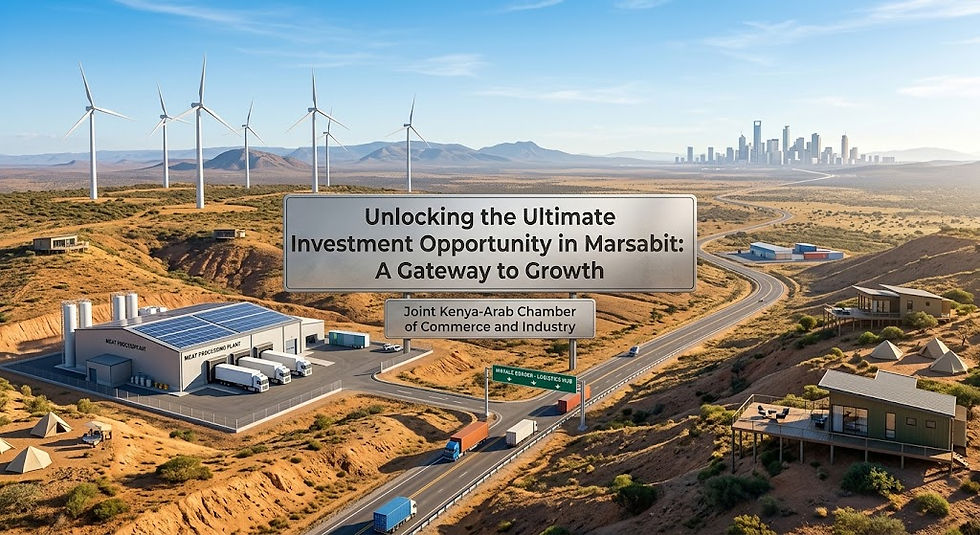
Infrastructure development remains one of the most visible and impactful areas of cooperation. From transport corridors and logistics hubs to energy projects and urban development, PPPs are helping to bridge critical infrastructure gaps in Kenya.
Arab investors and development partners have shown strong interest in financing and co-developing large-scale projects, including ports, roads, renewable energy plants, and smart cities. These initiatives not only enhance connectivity within Kenya but also strengthen its role as a regional trade hub linking Africa with the Middle East.
The result is a win-win scenario: Kenya benefits from accelerated development and improved service delivery, while Arab partners gain access to high-growth markets and strategic investment opportunities.
Energy, Sustainability, and the Green Transition
One of the most exciting dimensions of Kenya-Arab PPPs is the focus on sustainable energy. Kenya is already a leader in renewable energy in Africa, with a significant portion of its electricity generated from geothermal, wind, and solar sources.
Arab countries, many of which are investing heavily in clean energy transitions, are natural partners in this journey. Through PPP models, joint projects are being developed in solar farms, wind energy, and green hydrogen initiatives, contributing to global climate goals while supporting local energy needs.
These partnerships reflect a shared commitment to sustainability, innovation, and responsible development—values that are increasingly shaping the global investment landscape.
Expanding Trade, Investment, and Industrial Growth
Beyond infrastructure and energy, PPPs are playing a crucial role in expanding trade and industrial cooperation. Special economic zones, logistics parks, and manufacturing hubs are being developed with joint participation, enabling value-added production and job creation.
Kenya’s strong agricultural base also offers opportunities for agro-processing partnerships, where Arab investors collaborate with local enterprises to enhance productivity, improve supply chains, and access international markets.
In parallel, sectors such as tourism, healthcare, education, and technology are witnessing growing collaboration. PPP-driven initiatives are helping to modernize services, introduce new standards, and create platforms for knowledge exchange.
Empowering Communities and Building Capacity
A key strength of PPPs lies in their ability to deliver not only economic returns but also social impact. Projects are increasingly designed to include local workforce development, skills training, and community engagement.
Through Kenya-Arab partnerships, there is a strong emphasis on empowering youth, supporting entrepreneurship, and building human capital. This approach ensures that growth is inclusive and that the benefits of development are widely shared.
Capacity-building programs, professional exchanges, and joint ventures are also fostering deeper understanding and long-term relationships between institutions, businesses, and communities.
A Platform for Future Growth
As global economic landscapes continue to evolve, PPPs between Kenya and the Arab world are expected to grow in scale and sophistication. Digital transformation, fintech, smart agriculture, and innovation ecosystems represent the next frontier of collaboration.
The Joint Kenya-Arab Chamber of Commerce and Industry remains committed to facilitating dialogue, promoting investment opportunities, and supporting partnerships that create lasting value. By bringing together stakeholders from both regions, the Chamber serves as a bridge for ideas, expertise, and strategic cooperation.
Conclusion
Public-Private Partnerships between Kenya and the Arab world are not just a trend—they represent a new era of collaboration built on trust, shared ambition, and mutual benefit. As these partnerships continue to evolve, they are shaping a future where economic growth is inclusive, sustainable, and globally connected.
This new era is defined by opportunity, innovation, and a collective commitment to progress—an inspiring example of what can be achieved when regions come together with a shared vision for the future.

Sources :
Industry reports on Africa-Middle East trade cooperation, PPP frameworks in emerging markets, energy transition publications, regional investment outlooks, and development finance analyses.


Comments